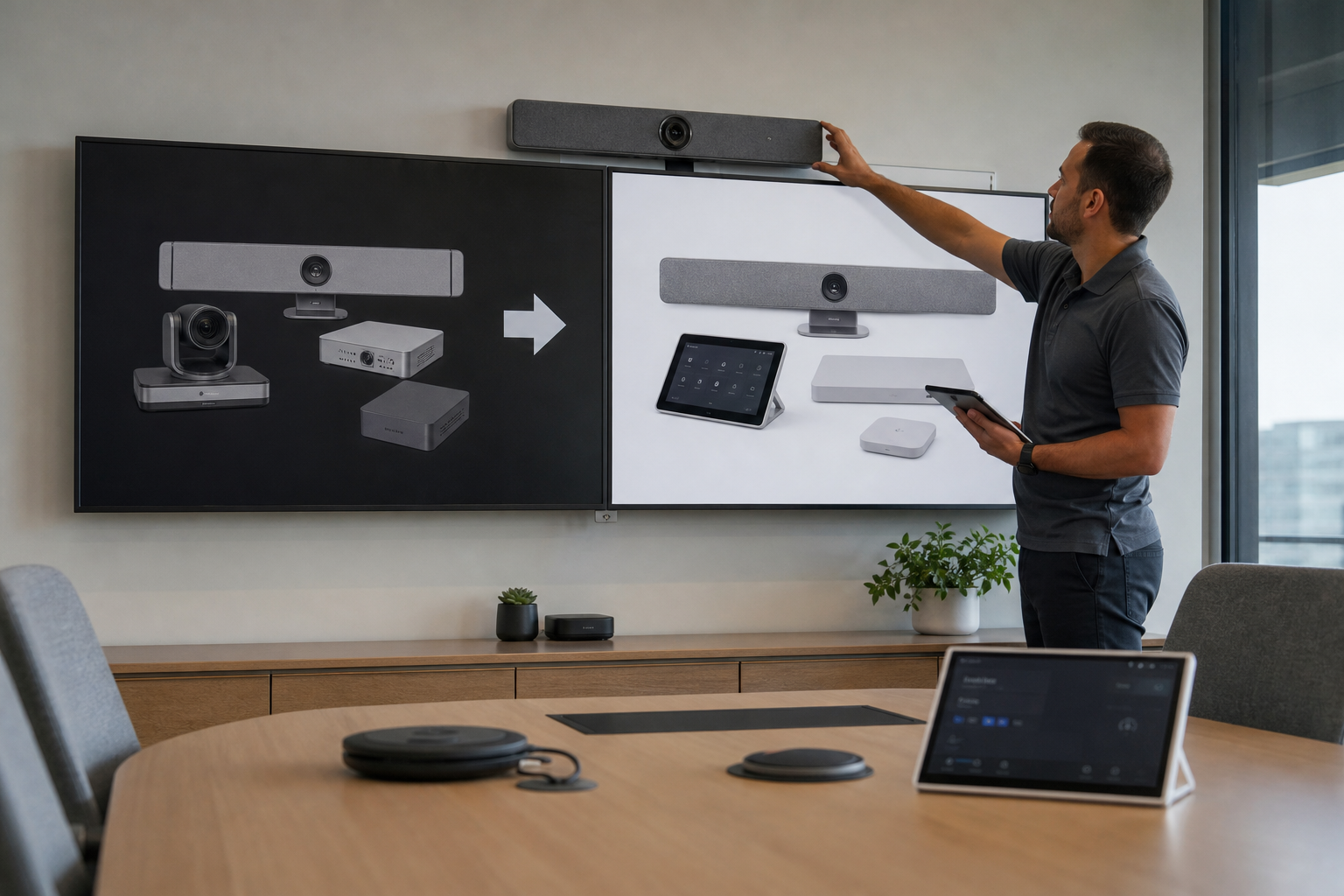
The interesting part of Zoom’s native support on Cisco devices is not that another meeting path exists. It is that the room hardware no longer has to be treated as disposable just because the platform choice changes.
Zoom now lists native Zoom Rooms support on Cisco Desk Pro G2, Board Pro G3, Room Kit EQ/EQX, Room Bar, Room Bar Pro, and Room Kit Pro. Cisco’s own notes frame this as a native Zoom experience, replacing the older pattern where Zoom on Cisco depended on SIP interoperability. In plain terms: the room can behave like a Zoom room without acting like a bridge project.
That changes how I would evaluate it. If a workplace already has Cisco rooms in place, the decision is no longer only “Which platform do we standardize on?” It becomes “How much of the installed base can stay useful without adding another layer of translation, support, and refresh cost?”
A practical example: a team may want Zoom for external customer meetings, but the company may still value Cisco hardware already mounted, cabled, and supported. Native support reduces the penalty for switching meeting ecosystems at the room level. It does not erase governance questions, but it does shrink the operational tax of reuse.
For architects and workplace teams, the useful filter is simple: if a platform change forces you to replace hardware, you are making a migration decision; if it can reuse supported room endpoints, you are making a lifecycle decision.
That is a different conversation.