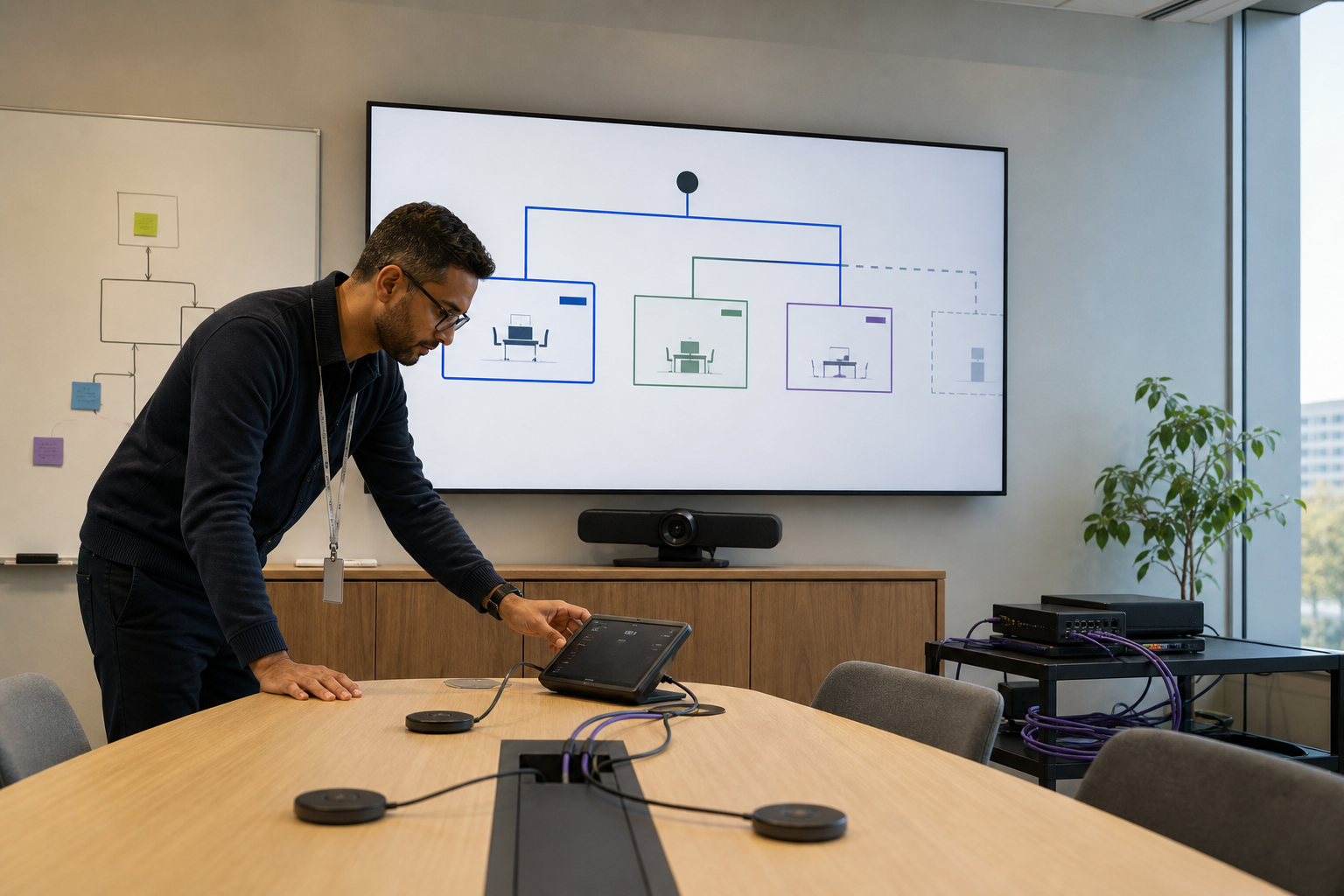
A Teams room is no longer just a set of hardware choices. Microsoft is turning room design into something you can define, publish, and manage as a repeatable pattern.
The useful part is not the room template by itself. It is the workflow around it: create a Room Standard, tie it to a room type and certified template, then publish it to a region, site, building, or one room for planning. Microsoft also recommends managing device settings through the Teams Rooms Pro Management Portal, including reusable templates and bulk configuration jobs, instead of relying on XML files.
That changes the unit of control. If a small huddle room is supposed to be a small huddle room, the camera, controller, account naming, and settings should all point to the same standard. Otherwise support inherits a different problem in every location: one room enrolled differently, one room configured by hand, one room that looks compliant until an audit or a ticket proves otherwise.
My view is that this is where room design becomes operational, not just visual. The question shifts from “what should this room have?” to “what pattern can we repeat without creating exceptions?” If you cannot answer that, the room is still a project artifact, not a managed service.